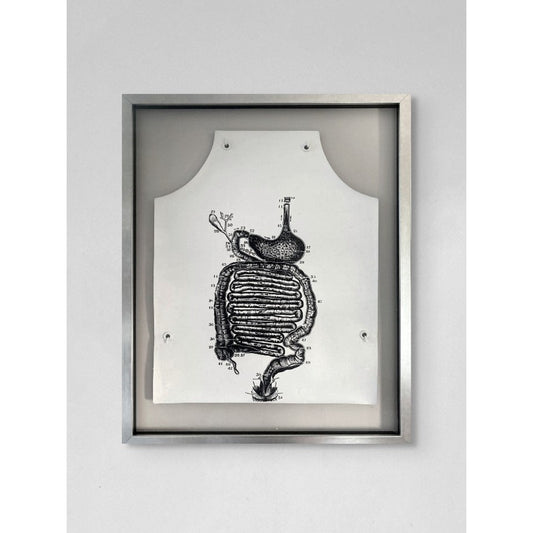
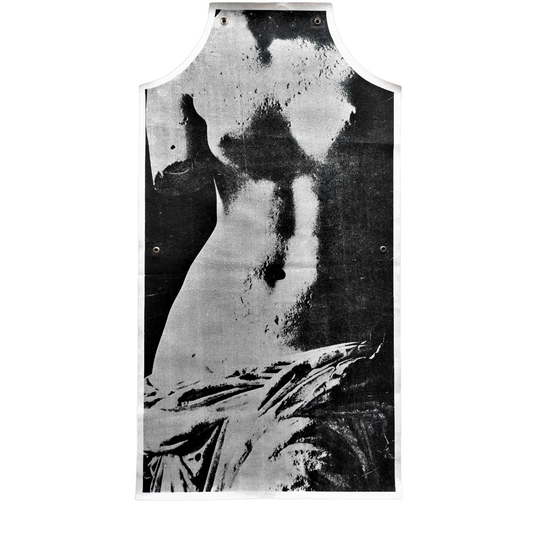
Jurgis Mačiūnas (George Maciunas, 1931–1978) was a Lithuanian-born artist and one of the founders of Fluxus. After fleeing Lithuania in 1944, he studied art history, graphic design and architecture in the US, and in 1960 opened the AG Gallery in New York with Almus Šalčius, where Fluxus was born. He wrote manifestos, published Fluxus anthologies and created happenings, actions and objects against “pure” art, believing art should be simple, playful and open to all.
Jurgis Mačiūnas (George Maciunas, 1931, Lithuania – 1978, USA) was a Lithuanian-born artist and one of the founders of the Fluxus movement.
His childhood unfolded in the already fairly modernized Kaunas of the 1930s. From 1938 to 1942 he attended Marija Pečkauskaitė Primary School, later continuing at Aušra Boys’ Gymnasium. In 1944, he fled to Germany with his parents, where he attended a Lithuanian gymnasium for three years.
In 1948, he moved to the United States. Between 1949 and 1952, he studied art history, graphic design, and architecture at the Cooper Union in New York. In 1954, he received a Bachelor’s degree in Architecture from the Carnegie Institute of Technology in Pittsburgh. From 1955 to 1960, he continued his studies at the Institute of Fine Arts at New York University, focusing on the art and culture of European and Siberian peoples.
In 1960, together with Almus Šalčius, he opened the AG Gallery at 925 Madison Avenue in New York (named after the initials of the founders). The gallery was intended as a space for lectures, action concerts, and screenings of non-commercial, poetic, and experimental films. Maciunas wrote manifestos, organized concerts, published and designed Fluxus anthologies and periodicals, and created happenings, actions, performances, conceptual images, objects, and humorous musical and literary works aimed against “pure” professional art. It was in the AG Gallery that the Fluxus movement was born.
Fluxus emerged as a разрушing force against “bourgeois” aesthetics and formalism, opposing academicism in art. Its aim to challenge traditional fine art and critique the artwork as a self-contained value was pursued through short, concrete forms, minimalist music, provocative actions, conceptual “event scores,” and ambiguous humor.
Fluxus strongly influenced—or even directly initiated—conceptual art, mail art, political art, mass culture, minimalism, new music, and performance art.
Maciunas believed that the Fluxus movement should temporarily serve a pedagogical function: to demonstrate that anything can become art, that art is accessible to everyone and created by all, and that it should not be defined by commercial or institutional value. In his view, art should be simple, natural, playful, joyful, and unpretentious. He also argued that the movement itself would eventually become unnecessary and should not last forever.
Maciunas died at the age of 46 from cancer. His funeral followed a script he had written himself—his ashes were scattered in the Atlantic Ocean.
The Vilnius municipality acquired the entire Maciunas collection for 5 million US dollars—around 2,600 items. In June 2006, the first part of the collection was brought to Vilnius. It includes works related to Film-Makers’ Cinematheque, the magazine Film Culture, Jonas Mekas’s projects, as well as significant works and documentation connected to the development of the SoHo district, and materials from Maciunas’s private life. The collection is housed at the Jonas Mekas Visual Arts Center in Vilnius.
Prepared based on information provided by the M. K. Čiurlionis National Museum of Art and sources from the Research and Encyclopedia Publishing Centre of the National Library of Lithuania.